Aller au contenu

The Link Between Death and the Desire to Return to Nature

lien entre décès et retour à la nature

After the loss of a loved one, everything can feel shaken. Grief does not affect only emotions. It also disrupts one’s bearings, daily habits, and sense of meaning in life.

In this context, some people feel a particular pull toward nature. They may want to walk outdoors, spend time in a garden, by the water, or in a quiet place. Others turn to plant-based symbols, soothing landscapes, or memorial items inspired by a more simple and organic world. This need is not universal, but it appears often enough to raise questions.

Why, after a death, does nature sometimes take on such an important place?

Research in grief psychology offers several possible explanations. It shows that connection to nature, symbolic rituals, and certain places of remembrance can help ease pain, rebuild meaning, and maintain a bond with the person who has passed away.

In other words, the connection between nature and grief is far from incidental. For some people, it even becomes a genuine source of support.

Why Nature Can Be Soothing During Grief

Nature is often associated with calm and restoration.

In the context of grief, this dimension can become especially important.

After a loss, the mind is often overwhelmed. Sadness, anxiety, mental fatigue, or a lasting sense of emptiness can take hold. In that state, some people instinctively seek out quieter environments.

That is where nature comes in.

A landscape, a wooded area, a garden, or a waterside setting often offers:

  • less stimulation
  • more silence
  • a slower pace
  • a sense of stability

This kind of setting can help a person breathe a little more easily.

Recent research points in this direction. According to Schony and Mischkowski (2024), it is not only the fact of being in a natural environment that matters. What also seems important is the inner feeling of being connected to nature.

For some bereaved individuals, this subjective connection appears to be associated with greater psychological resilience and a reduction in certain depressive symptoms linked to complicated grief.

In other words, nature does not remove the pain. But it can offer a form of comfort.

And sometimes, that is already something immense.

Nature and Grief: A Way of Restoring Meaning After Loss

Grief is not only an emotional reaction.

It is also an inner process.

When a loved one dies, a person must gradually reorganize their inner life. They must learn to integrate the absence, reassess their bearings, and try to recover a sense of coherence. Kakar and Oberoi (2016) also remind us that grief involves a profound reorganization of one’s relationship to time, absence, and the world.

In this process, symbols matter greatly.

And nature is full of symbols.

The seasons, the earth, trees, flowers, and cycles of growth can help some people think about death in a different way — not as a complete rupture, but as a transformation that is part of a larger movement.

That does not make the loss easier.

But it can make it a little more understandable.

This is no doubt one of the reasons why some people turn to natural imagery after a death. In it, they find a way to represent:

  • continuity
  • transformation
  • belonging to something greater
  • the passage of time

From this perspective, returning to nature can be understood as an attempt to place the loss within a broader framework than immediate pain alone.

Nature-Related Rituals Can Support the Grieving Process

Rituals play an important role in the experience of grief.

They make it possible to perform a gesture. To mark a transition. To express something that sometimes goes beyond words.

Recent research shows that rituals can help structure the grieving experience and support acceptance of the loss (Phan et al., 2025; Adhikary, 2024).

These rituals are not necessarily religious.

They can be very simple. And very personal as well.

For example:

  • planting a tree
  • laying flowers
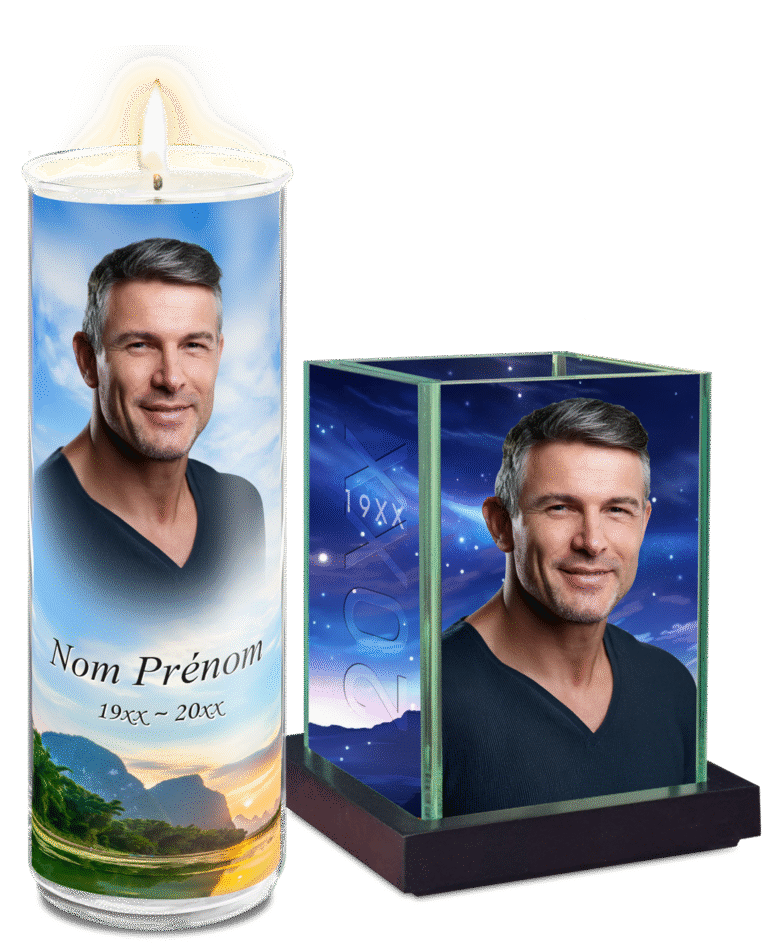
  • lighting a candle
  • creating a small place for reflection
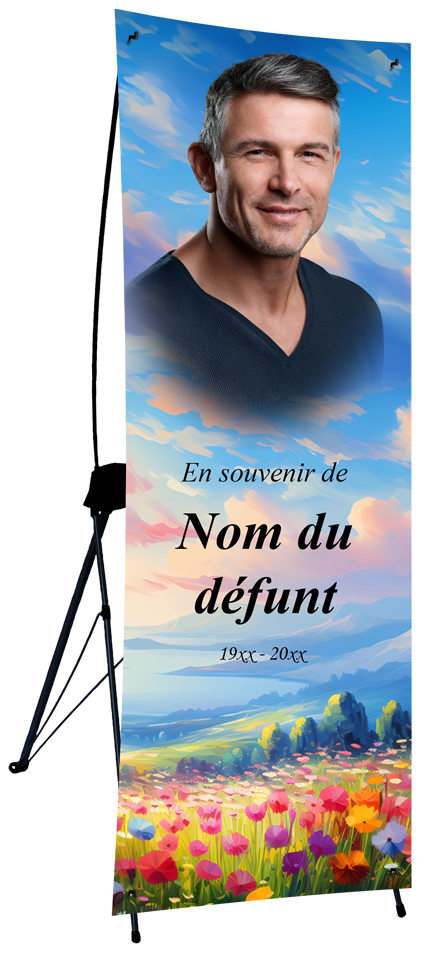
  • keeping a memorial item inspired by nature

These gestures often carry strong symbolic meaning.

They give shape to absence. They also make it possible to maintain a transformed bond with the person who has died. This is precisely what Sas and Coman (2016) emphasize in their work on commemorative practices.

In this context, references to nature play a particular role.

A flower, a soft light, a landscape, a natural material — all of these can become supports for remembrance.

Simplicity. Restraint. Presence.

Sometimes, that is enough to express something very deep.

Why Some Natural Places Become Places of Remembrance

Grief is also connected to places.

Some spaces become emotionally charged. Others gradually become inner landmarks over time.

Maddrell’s work (2016) shows that bereaved people often develop true emotional maps. Some places become associated with pain. Others become linked to comfort, memory, or a kind of symbolic presence of the deceased.

That is why certain natural places can take on such importance.

They may be:

  • a garden
  • a wooded area
  • a riverbank
  • a familiar path
  • a landscape loved by the person who has passed away

These places do not serve merely as a backdrop.

They become spaces for reflection and remembrance.

People return to them to think, to remember, to feel close. Sometimes also to cry. Or simply to remain in silence.

In the relationship between nature and memory, places therefore matter deeply. They help anchor remembrance in something concrete, stable, and felt.

A Search for Simplicity After a Death

After a loss, many people feel the need to return to what matters most.

Grief often acts as a revealer. It changes priorities. It makes certain things feel secondary. And it sometimes leads people to seek greater simplicity.

It is in this context that an attraction to natural forms can emerge.

Raw materials, soft colors, floral patterns, peaceful landscapes, or understated objects inspired by nature can feel more emotionally fitting.

  • They speak without overdoing it.
  • They accompany without overwhelming.

Some research, such as that of Higgins (2020), suggests that symbolic, aesthetic, or commemorative practices can help reorganize inner experience after a profound loss.

This helps explain why some people choose more organic visual worlds in grief.

This choice is not merely aesthetic.

It may reflect a need for authenticity. For coherence. And also for gentleness.

Connection to Nature During Grief Is Not Universal

It is important, however, to add nuance.

Not everyone experiences grief in the same way.

Some people find comfort in nature. Others find it in conversations with loved ones, in religious rituals, in writing, in music, or in more intimate personal practices.

Research does not suggest, then, that a death automatically leads to a desire to return to nature.

Rather, it shows that for some people, connection to nature during grief can support:

  • emotional soothing
  • continuity of the bond
  • the reconstruction of meaning
  • remembrance of the deceased

In other words, it is one possible response. Sometimes common. But not universal.

And that is important to remember.

What the Connection Between Nature and Grief Teaches Us

The connection between nature and grief reveals something deeply human.

When loss occurs, many people search for anchors. Something stable. Quiet. Something larger than immediate pain.

Nature can offer that.

It does not answer everything. It does not heal grief. But it can provide a setting. A breath of space. A symbolic source of support.

For some people, it becomes a quiet language for speaking about absence, memory, and continuity.

Perhaps that is why, after a death, some people feel this movement toward plants, landscapes, and simple materials.

As if nature made it possible, for a moment, to lay down what words cannot always carry.

FAQ: Nature and the Grieving Process

Why does nature soothe some grieving people?
Nature often provides an environment that is calmer, more stable, and less stimulating. For some people, this helps reduce the emotional overload associated with grief.

Is there a link between connection to nature and resilience?
Yes, some recent research suggests that a subjective sense of connection to nature may be associated with greater psychological resilience in bereaved individuals.

What nature-related rituals can be done after a death?
Some people plant a tree, lay flowers, create a memorial garden, or choose keepsakes inspired by natural elements.

Why do some natural places become important in grief?
Because they can become places of remembrance, reflection, or symbolic presence. They offer an emotional setting in which the loss can be felt and contemplated.

Is the desire to return to nature after a death common?
Yes, it can be common, but it is not universal. Everyone experiences grief differently.

Do memorial items inspired by nature play a particular role?
Yes. They can serve as symbolic supports for expressing memory, gentleness, continuity, and the bond with the person who has passed away.

Conclusion

After a death, some people feel a need to return to nature because they find in it something more than a simple backdrop.

They may find calm there. Sometimes meaning. Sometimes a quiet way of maintaining a bond with the person who has passed away.

Research shows that nature, symbolic rituals, places of remembrance, and certain memorial forms can support the grieving process. Not for everyone. Not in the same way. But often enough that this movement deserves to be understood.

At its core, this return to nature may reflect something simple: in times of hardship, many people seek a sense of continuity, gentleness, and grounding.

And nature, in its silent language, can sometimes offer that.

For more information, do not hesitate to contact us, and we will be happy to respond as promptly as possible.

See our memorial items

See our memorial items