Aller au contenu

Unusual Objects in Mourning Rituals

Objets insolites dans rituels de deuil

Throughout human history, mourning rituals have offered profound ways to express grief, preserve memory, and seek spiritual solace. Today, beyond traditional urns and gravestones, unusual objects in mourning rituals are emerging as powerful symbols of connection, creativity, and culture. These artifacts—though often surprising—help us tell richer stories about our relationships with those we’ve lost. As Canadians explore more personalized, eco-conscious ways to remember their loved ones, they are also adopting some of these unique global mourning practices.

Memorial Beads in South Korea

In a country where cremation is both common and spatially necessary, South Koreans have pioneered an elegant twist on remembrance: memorial beads. Rather than store ashes in a conventional urn, families have them compressed into polished, pastel-colored beads.

These beads—gentle hues of jade green, rose pink, or baby blue—are placed in glass jars or displayed on shelves, blending seamlessly with home décor while preserving emotional depth.

Why It Matters:
This visual, tactile tribute helps loved ones maintain a daily connection with the deceased. For families dealing with urban constraints and evolving views on mourning, this approach offers peace, privacy, and poetry.

Objets insolites dans rituels de deuil

Golden Masks of Ancient Egypt

From a land of pyramids and eternity came one of history’s most iconic funerary objects: the golden burial mask. Made to preserve identity and protect the spirit, these masks—like that of Tutankhamun—were both spiritual shields and aesthetic marvels.

The Deeper Message:
Ancient Egyptians believed that preserving the face was essential for recognition in the afterlife. These masks were less about display and more about destiny.

Objets insolites dans rituels de deuil

Renaissance Wax Masks

In Europe’s Renaissance period, high-status families created wax masks of the deceased to preserve likenesses. More than art, they became physical manifestations of grief—a way to « keep » a loved one’s presence alive.

Objets insolites dans rituels de deuil

Memento Mori Artifacts

Latin for « remember you must die, » memento mori appeared as skull rings, bone carvings, and hourglasses in 17th-century Europe. These pieces reminded wearers to live virtuously, cherishing every breath.

Objets insolites dans rituels de deuil

Fantasy Coffins in Ghana

Ghana’s funerary artistry is renowned for its fantasy coffins—elaborate, hand-crafted boxes shaped like airplanes, fish, shoes, and even cell phones. These coffins celebrate the deceased’s profession, dreams, or legacy.

Cultural Insight:
Funerals become vibrant expressions of personality rather than somber ceremonies. Mourning becomes a celebration of life fully lived.

Objets insolites dans rituels de deuil

Tree Burials by the Toraja People

In Sulawesi, Indonesia, the Toraja people lay deceased infants in tree trunks. Over time, the tree « heals, » symbolically integrating the child into the cycle of life.

Objets insolites dans rituels de deuil

Ash Tattoos: Mourning in Ink

A deeply intimate practice, ash tattoos involve mixing cremated ashes into ink and embedding them into the skin. Though rare, this method creates a permanent, embodied tribute.

Objets insolites dans rituels de deuil

Biodegradable Living Urns

An increasingly popular option in Canadian green burial communities, these urns include a tree seed. When planted, the ashes nourish new life—turning grief into growth.

Objets insolites dans rituels de deuil

Hanging Coffins in Asia

Cliffside burials in Sagada, Philippines, and parts of China reflect beliefs in lifting the soul closer to heaven. Suspended high above the earth, these coffins blend respect and spiritual ascent.

Objets insolites dans rituels de deuil

Victorian Grave Bells

In 19th-century Europe, a deep-seated fear of premature burial led to the invention of grave bells—strings attached to the deceased’s hand, allowing them to ring for help if they awoke underground. Though rarely used, the idea sparked a morbid yet fascinating safety trend.

Objets insolites dans rituels de deuil

Funeral Coins: Ancient Fare for the Afterlife

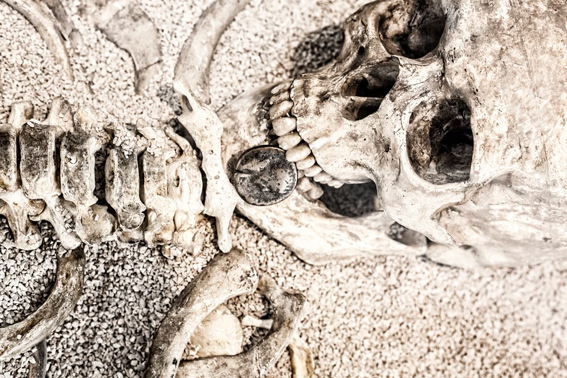
In both Ancient Greece and traditional Chinese culture, coins placed in the mouth or coffin helped the deceased navigate or finance their journey to the next world.

Objets insolites dans rituels de deuil

Currencies in China

In China, similar practices have existed for centuries. Families burn or place money in the coffin to allow the deceased to provide for themselves in the afterlife.

Objets insolites dans rituels de deuil

Conclusion

Though at times strange or unexpected, unusual objects in mourning rituals shine a light on the diversity of human expression in the face of death. These practices—whether ancient or modern—show our desire to find beauty, meaning, and connection amid sorrow.

In Canada’s increasingly diverse cultural landscape, embracing these rituals could offer more inclusive and heartfelt ways to honour those we’ve lost.

FAQs

Are Korean memorial beads used outside of South Korea?
Yes, they’re becoming popular in diaspora communities and among people looking for artistic and subtle alternatives to urns.

Are ash tattoos safe?
If done professionally, with sterilized ashes and medical-grade ink, they are safe. Always choose certified artists.

Do fantasy coffins exist outside Ghana?
Yes, they’ve inspired coffin artists in the U.K., U.S., and Canada—especially among immigrant communities.

What is the benefit of a living urn?
It helps families find comfort in creating life from loss, giving a tangible, growing space for remembrance.

Are hanging coffins still in use today?
Some are still maintained as cultural heritage in places like Sagada, but they are now more symbolic than functional.

Can digital memorials replace traditional ones?
Not entirely, but they offer new, flexible ways for faraway loved ones to participate in grief and remembrance.

For more information, do not hesitate to contact us, and we will be happy to respond as promptly as possible.

See our memorial items

See our memorial items